
FAQ
FAQ1. In one patient after incubation and centrifuge, there were big blood clots in each BTS which came up during serum transfer blocking the serum flow completely. It was only 1.5 serum in each SAS. Did you have it in your practice before? Is it somehow patient-related as all 4 BTS were the same? Could you advise what the reason could be and how to manage then?

Answer
This can happen, to solve the problem you should shake the syringe a few times and centrifuge it again. In some cases, you have to do it 2-3 times. It does not reduce the quality of our GOLDIC serum.
FAQ2. The photos show the frozen serum. The darker serum preparations are a bit turbid in the frozen condition. The serum had noticeably different colors. Does that happen more often? Is this a handling issue?

Answer
Collect whole blood (app. 10 ml) using an appropriate technique and our BTS tube. Approximately 1/3 of whole blood volume is serum; therefore, collecting 10 ml of whole blood is required to reach a final volume of app. 3 ml serum. Fill all 4 BTS tubes.
Please ask the patient to drink plenty of water before the blood taking process to avoid clogging the filter and to get a “nice, yellow (not too fatty)” colour from the GOLDIC serum.
After collection of the whole blood, allow the blood to clot by putting all 4 BTS tubes at the incubator (24 hours at 37° C ).
Remove the clot by centrifuging all 4 BTS tubes at 4.000 rpm for 10 minutes, a regular centrifuge will suffice our requirements.
The resulting supernatant is designated GOLDIC serum, it should be clear to yellowish in colour. Based on rapid aspiration it can happen that the serum tends to turn slightly red, due to hemolysis. This does not invalidate the GOLDIC characteristics.
Connect each BTS – tube with each of our Serum-Application-System (SAS) – tubes and press the enriched GOLDIC serum through our filter (porosity 0.2 micrometer; volume of enriched GOLDIC serum app. 3 ml). This has to be done 4 times to get all 4 SAS tubes filled.
Collected GOLDIC SAS samples freeze, store (at -18°C) and transport frozen (veterinarian use). Ensure there is enough packing material or ice to prevent samples from thawing en route (if necessary – veterinarians for example…).
Please label all tubes clearly with a waterproof permanent marker, and have it correspond to the information in the lab book.
GOLDIC serum is now ready for use.
FAQ3. What are the blood components and what is hemolysis? What is the different between Plasma and Serum?

Answer
In the average adult male, there are approximately 4,75 litres of blood, composed of about 2.85 litres of plasma and 1.9 litres of cells.
Blood cells are suspended in the plasma, which is made up of water and dissolved materials, including hormones, antibodies, and enzymes that are being carried to the tissues, and cellular waste products that are being carried to the lungs and kidneys.
The major blood cells are classified as red cells (erythrocytes), white cells (leukocytes), and platelets (thrombocytes).
The red cells are delicate, round, concave bodies that contain haemoglobin, the complex chemical that transports oxygen and carbon dioxide.
Hemolysis occurs when the thin protective membrane that encases the fragile red cells is ruptured, allowing haemoglobin to escape into the plasma. Hemolysis can be caused by rough handling of a blood specimen, leaving the tourniquet on too long (causing blood stasis) or squeezing the tip of the finger too hard during capillary collection, dilution, exposure to contaminants, extremes in temperature, or pathologic conditions.
The primary purpose of the white cells is to fight infection. In a healthy person, the white cells respond to minor infections by increasing in number and eliminating pathogens.
Platelets are small fragments of special cells that aid in blood clotting.
Either plasma or serum may be separated from the blood cells by centrifugation. The essential difference between plasma and serum is that plasma retains fibrinogen (the clotting component), which is removed from serum.
Serum is obtained from clotted blood that has not been mixed with an anticoagulant (a chemical that prevents the clotting of blood). This clotted blood is then centrifuged, yielding serum, which contains two types of protein: albumin and globulin.
Plasma is obtained from blood that has been mixed with an anticoagulant in the collection tube and has, therefore, not clotted. This mixed blood may then be centrifuged, yielding plasma, which contains albumin, globulin, and fibrinogen.
There are numerous coagulation factors (factor VIII, factor IX, etc) involved in the clotting of blood. Several different types of anticoagulants interfere with the activity of these factors to prevent clotting. Both anticoagulants and preservatives may be required for plasma specimens.
For GOLDIC we do not use any foreign material / anticoagulant!
FAQ4. After defrosting the prepared GOLDIC® serum for use: Is it possible to freeze it again at -18° C (for example, if they patient doesn´t show up and treatment has to be postponed)?

Answer
Yes, you can defrost the serum and freeze it again. The enriched Cytokines will lose a minuscule dose of their potential and this will have no effect on the treatment, in general.
To avoid this situation, it would be a better practice to take out the serum from the freezer when the patient has arrived. It just takes a few minutes at room temperature for the GOLDIC® serum to be ready for injection.
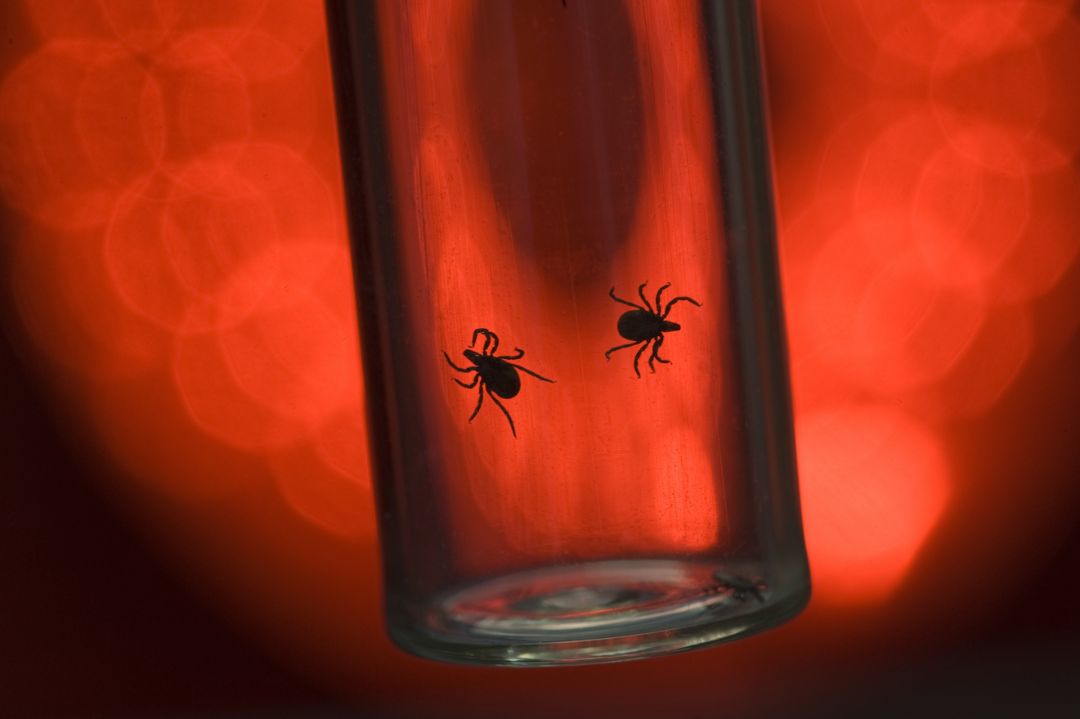
FAQ5. Can the GOLDIC® serum be used for patients with Lyme disease (borreliosis)? Symptoms may include muscle pain, joint pain, severe headache with neck stiffness and others.
Answer
No, Lyme disease (borreliosis) is an infectious disease caused by a bacterium and like other infectious diseases (HIV, Hepatitis, etc.) patients with these kinds of diseases should not be treated with GOLDIC® serum.
Generally speaking: GOLDIC® serum is extremely safe because of the filter of our Serum- Application-System (SAS).
Our filter used is a bacteria filter with a porosity of 0.2 μm (called: micrometre or micron). This filter makes GOLDIC® serum safe. It prevents gold particles (app. 2 μm), bacteria (the average diameter of spherical bacteria is 0.5-2.0 μm) and cells (cells are in a range of 2-120 micrometre) to be transferred with the enriched GOLDIC® serum.
Even viruses as part of a cell (a virus is a small infectious agent that replicates only inside the living cells) to be transmitted because they all have a bigger diameter.
FAQ6. Can we say that using GOLDIC® serum is a form of stem cell therapy?
Answer
No, the GOLDIC® Set 4 Ortho & Sport is registered as a medical device class IIb conforms with the requirements of annex II excluding (4) of the Directive 93/42/EEC on medical devices.
Regulatory Framework
Regenerative Medicine (RegMed) is based on the ability to stimulate the body´s own regeneration and repair processes or to replace naturally diseased tissues by means of novel therapies.
Besides conventional and biotechnological active ingredients and bio-materials, novel cell and tissue therapies have preferentially been applied. Since the end of 2008, this particular group of therapies is regulated under the term “Advanced Therapy Medicinal Products” (ATMP) in a specific EU regulation (REGULATION (EC) No 1394/2007). In this “Lex specialis” the particularities of these class of products have been considered under the roof of the Pharmaceutical Legislation.
The motivation of the European Union to enact the new regulation was to ensure protection and safety for patients, to ensure free trade in the European Union and finally – very important for all research institutions active in this research field – not to impair the medical R&D progress.
The basic directive for all cell and tissue products is the European Tissue Directive (DirL 2004/23/EC) (in combination with the Dir 2006/17/EC “Procurement” and Dir 2006/86/EC “Processing“).
The ATMP include gene therapy medicinal products (GT), somatic cell therapy medicinal products (SCT), and tissue engineered products (TEP), as well as “combined advanced therapy medicinal product”.
Stem Cell Therapy
The single most common native cell in the human body is the red blood cell (RBC), or erythrocyte.
Most human cells fall within a size range of 2-120 microns.
• Platelets are app. 2 microns
• Red cells app. 3 microns
• Lymphocytes app. 6-12 microns in size
• Fibroblasts app. 10-15 microns
• Osteocytes app. 10-20 microns
• Chondrocytes app. 20 microns
• Macrophages app. 20-80 microns
• Hematopoietic stem cells app. 30-40 microns,
• Muscle cells (app. 30% of all tissue cells) also vary from 10-100 microns in diameter
However, the “average” tissue cell, if such a thing may be said to exist, is probably 20 microns in diameter.
Keep in mind:
Porosity of our filter 0.2 microns/micrometre.
GOLDIC® serum consists of enriched cytokines and growth factors.
GOLDIC® serum helps to activate and differentiate existing, local stem cells. No transfer of cells.
FAQ7. Is the different color of the serum normal?

Answer
Yes, the different colours of the serum depending on the speed during blood collection.
The GOLDIC enriched serum can be any colour, from yellow to orange to brownish. A typical unit will be yellowish.
Those units that came from individuals that ate a high-fat meal (such as a Big Mac) before donating, or that have chronic high cholesterol, will be lipemic (high concentration of lipids (or fats) in the blood) and milky in appearance. The colour depends on certain factors such as medications, the health of the donor, how well it spun in the centrifuge, etc…
The various colours do not affect the GOLDIC serum properties.